Bowie, Maryland
Wood Deck Installation in Bowie, MD
Wood Deck Installation in Bowie, Maryland, with published price ranges up front, the yard, the footings, and the design settled on site, and one written figure before any work begins.
Bowie, Maryland
Wood Deck Installation in Bowie, Maryland, with published price ranges up front, the yard, the footings, and the design settled on site, and one written figure before any work begins.
We install wood decks across Bowie for owners who want real lumber underfoot, a classic look, and a build that can be repaired board by board over the years. Wood remains the material most Bowie homes started with. The ranchers and colonials of Belair, the 1990s builds in Woodmore and Fairwood, and the split levels in Chapel Forge all carried wood decks first, and a well built new one suits that housing stock.
A new wood deck is not the old deck built again. Codes tightened, ledger practice improved, and footing expectations changed. The deck that went up in 1994 with a nailed ledger and shallow posts would not pass as sound work today. We build the new version to current practice, with the warm surface owners love and the bones the old decks lacked.
The job begins below ground. Concrete footings carry the posts, and in Bowie clay those footings need real depth and a solid base, because shallow posts have heaved decks all over this city. Posts, beams, and joists follow in pressure treated lumber, sized to the span, with the ledger board bolted and flashed where the deck meets the house so water sheds away instead of rotting the rim in secret.
Decking goes down next, most often pressure treated pine, with cedar as an option for owners who prefer its color and grain. Boards are spaced for drainage and seasonal movement. Stairs are framed with solid stringers, and railings are built to current height and spacing rules, with a graspable rail where stairs call for one.
Details at the edges separate a deck that ages well from one that ages fast. End cuts get treated, joist tops can carry protective tape, and fascia closes the rim cleanly. None of that shows in a photo, and all of it shows ten years later in how the frame feels under your feet.
Shade defines deck life here. Big wooded lots are a gift in August and a slow problem the rest of the year. Boards on the north side of a house stay wet, algae turns them green and slick, and leaves pack between boards and hold moisture against the frame. Stair stringers in deep shade rot first, quietly, at the ground end where nobody looks.
A sound wood deck plan answers those conditions instead of ignoring them. We keep airflow open under low decks and pitch the surface a touch so water runs off rather than pooling at the house line. We talk honestly about stain and sealer schedules, because wood asks for care on a cycle, usually a cleaning each year and fresh sealer or stain every two to three years. Owners who know they will skip that care should hear the composite talk too, and we will have it plainly.
Sun cuts the other way. Open yards in Somerset and South Bowie bake boards dry, and dry boards check and splinter over time. Board selection matters there, tighter grain, fewer defects, careful fastener choice. Two yards on the same street can ask for different calls, and the site visit is where those calls get made.
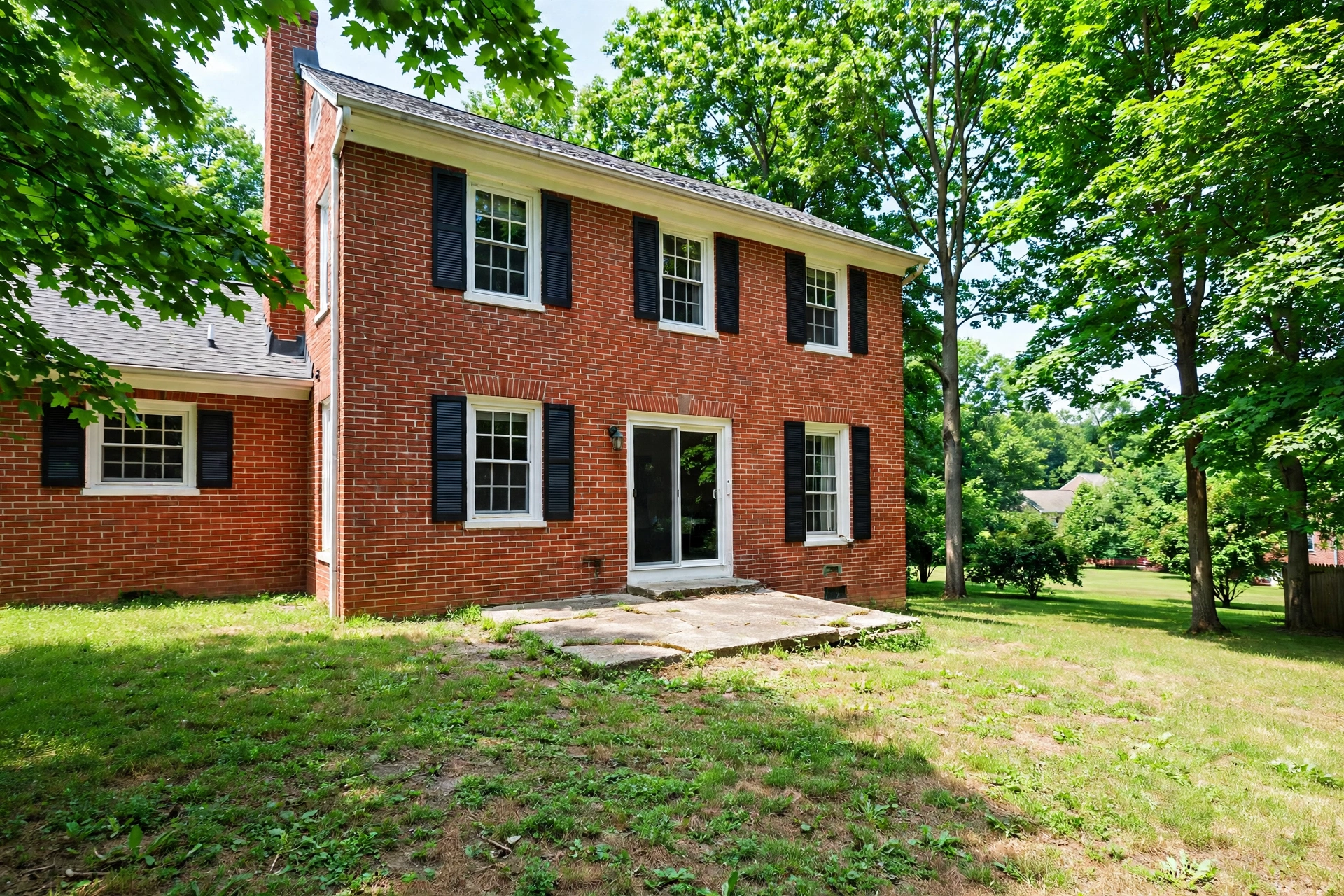
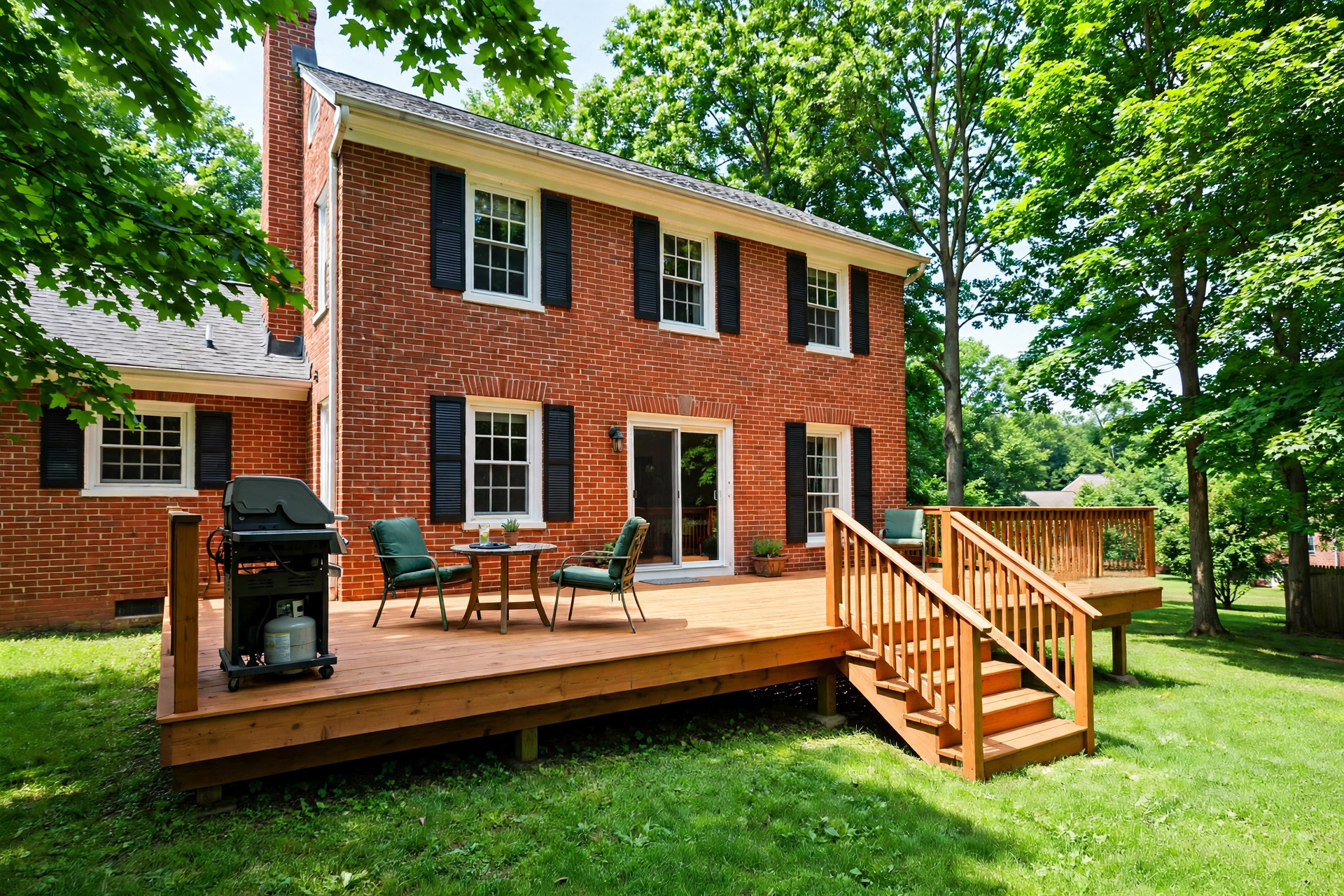
A Chapel Forge home needed a new back deck where an aging platform had been removed, leaving a patched yard and a house rim that showed old water staining at the ledger line. We dug new footings in clay soil, repaired and flashed the ledger area, framed the deck in pressure treated lumber, and laid new wood decking with built stairs down to the yard. The frame was left open underneath for airflow, and the stair stringers were set on concrete pads clear of bare soil.
No Bowie company publishes a local price list, so planning figures here come from published guides, labeled as such, plus the range we quote from for this service. Published guides put pressure treated wood decks at $35 to $55 per square foot installed. Published guides put typical deck projects at $15,000 to $25,000 overall. The Baltimore area Cost vs Value report puts a wood deck addition at about $17,183. Most wood deck installations through Bowie Deck Company fall between $11,900 to $21,500, with a written scope after a site visit setting the firm figure.
What moves a wood deck inside that range is easy to name. Square footage leads, and stair count and railing length follow. Cedar costs more than pressure treated pine. A ground level platform prices lower than a deck at a raised back door with tall posts and a long stair run. Old deck removal, footing surprises in clay, and repair at the house rim all add to the work, each stated in the scope before building starts. Deck work in Bowie runs through a county building permit with Prince George's County DPIE.
First comes the form at the bottom of this page and a site visit at your home. We measure the space, check door height and yard slope, probe the soil, and look at how water moves across the lot. HOA rules get checked early where they apply, since Woodmore, Fairwood, and Mitchellville communities can limit deck size, railing style, and even stain color.
Next comes design on paper, size, stairs, railing, and board choice settled before any lumber is ordered, then the county permit step. On build days the order stays steady. Footings first. Frame second, with inspections as the county process requires. Decking, stairs, and railing after that. The last day ends with a walkthrough and a plain talk about the care cycle your new deck needs.
We keep the site tidy and the communication direct. If weather stalls a pour or an inspection slot shifts, you hear it the same day with the revised plan.
In published guides, pressure treated wood decks run $35 to $55 per square foot installed, and typical deck projects run $15,000 to $25,000 overall. The Baltimore area Cost vs Value wood deck addition runs about $17,183. Most wood deck installations through Bowie Deck Company fall between $11,900 to $21,500, set by size, stairs, railing, and board choice.
A well built pressure treated frame can serve for decades, and deck boards commonly serve fifteen years or more with steady care. The weak points in Bowie are shaded stair stringers, ledger areas without proper flashing, and shallow footings in clay. Sound work at those three spots decides most of the lifespan story.
Plan on a yearly cleaning, a check of boards, railings, and stair connections, and fresh stain or sealer every two to three years as sun and shade dictate. Keep leaves and debris out of the gaps between boards. In deep shade, wash algae film off before it turns slick, especially on north facing steps.
Yes, deck building in Maryland is MHIC governed home improvement work, and a new deck in Bowie needs a county building permit through Prince George's County DPIE. The process covers footings, framing, ledger attachment, guards, and stairs in general terms. We build that step into the project sequence.
Pressure treated pine costs less, carries strong resistance to rot and insects from its treatment, and takes stain in a wide range of colors. Cedar costs more, starts with a richer natural color, and resists decay on its own, though it still wants sealer to hold its look. Your budget, your color goal, and your upkeep plans point to the answer.
Often yes, if the old footprint still suits the yard and any HOA rules on your street. Many owners keep the footprint and fix the bones, better footings, a bolted and flashed ledger, and code current railings. Others take the chance to widen a cramped 1990s deck, and the site visit is the place to weigh both paths.
Tell us about the deck you want. We read every request that comes in and respond with the published range for that kind of work and the next step, starting with a visit to measure the yard and talk through design and materials.
Prefer to talk it through first? Send the form and we will call you back at the number you give us.