Bowie, Maryland
Deck Stairs and Railings in Bowie, MD
Deck Stairs and Railings in Bowie, Maryland, with published price ranges up front, the yard, the footings, and the design settled on site, and one written figure before any work begins.
Bowie, Maryland
Deck Stairs and Railings in Bowie, Maryland, with published price ranges up front, the yard, the footings, and the design settled on site, and one written figure before any work begins.
Stairs and railings are the parts of a deck people touch, lean on, and trust with their balance, and they are where older Bowie decks show age first. We build and rebuild deck stairs and railings across Bowie, as part of new decks and as stand alone work on decks whose surface still has life in it. A solid deck with rotten stairs is not a solid deck.
Shade is the local condition, and stairs collect the worst of it. Stringers, the diagonal boards that carry the treads, sit close to the ground at the bottom of a flight, in the dampest air in the yard. Leaves pack against them and water splashes up from the soil, so a stringer bottom can rot quietly for years while the treads above look presentable.
Stair geometry matters as much as lumber condition. Code facts, stated as facts: riser heights and tread depths must stay consistent through a flight, because people climb by rhythm and one odd step is where trips happen. Guards are required on decks above a set height, handrails must be graspable and continuous, and baluster spacing is limited so a small child cannot pass through. Older Bowie stairs often show uneven risers and wide baluster gaps from a looser era.
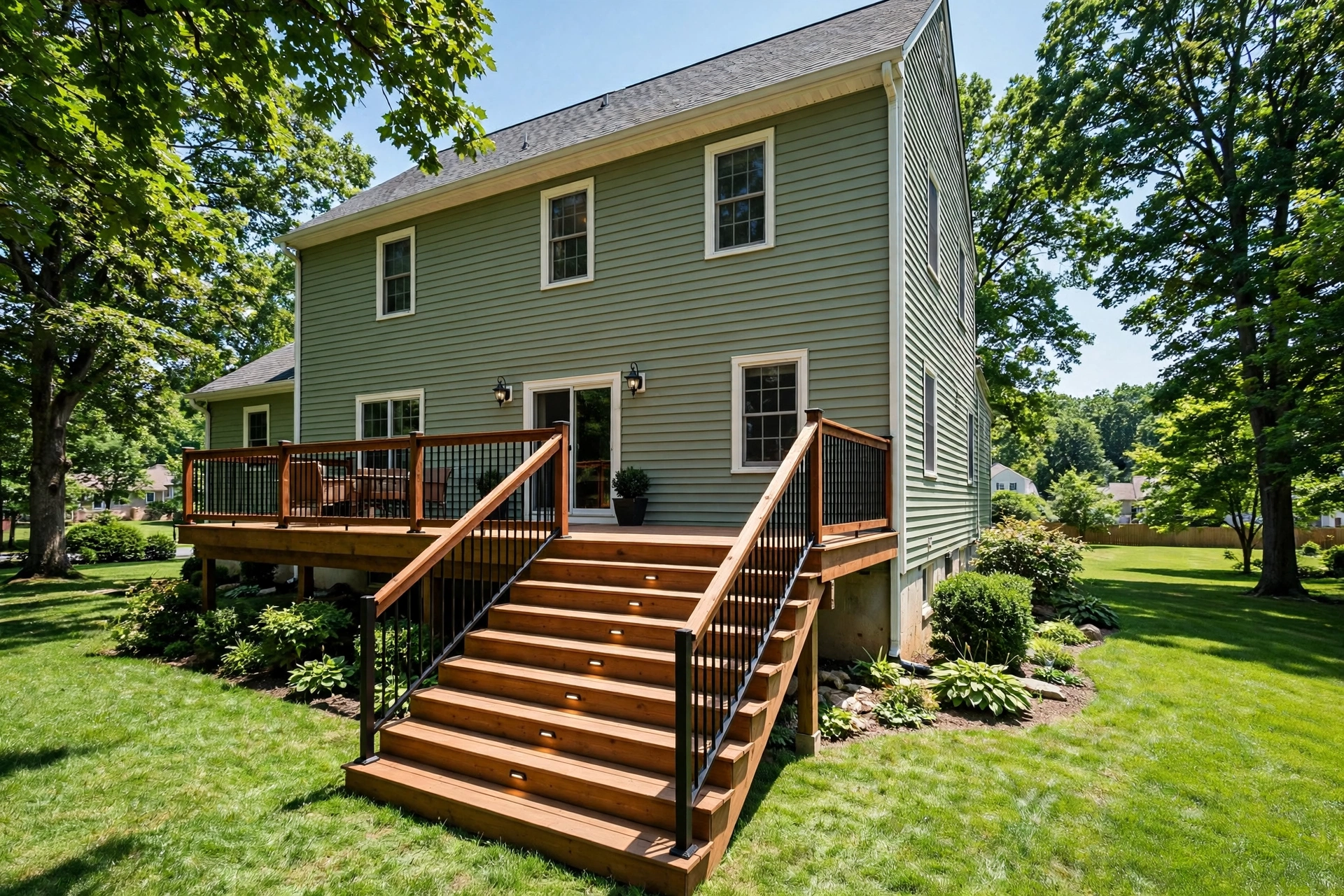
A railing is only as strong as its posts, and posts belong in the framing. We anchor railing posts to joists and blocking below the surface, so the run becomes part of the structure. Pressure treated wood matches an existing deck and costs least, but needs upkeep and can splinter where hands run. Composite pairs with composite surfaces. Powder coated aluminum gives slim profiles and open sight lines, and HOA rules in Woodmore and Fairwood can shape the choice.
Deck building in Maryland is home improvement work governed by MHIC rules, and stair and railing work can fall under county building permits through Prince George's County DPIE, stated as a general market fact.
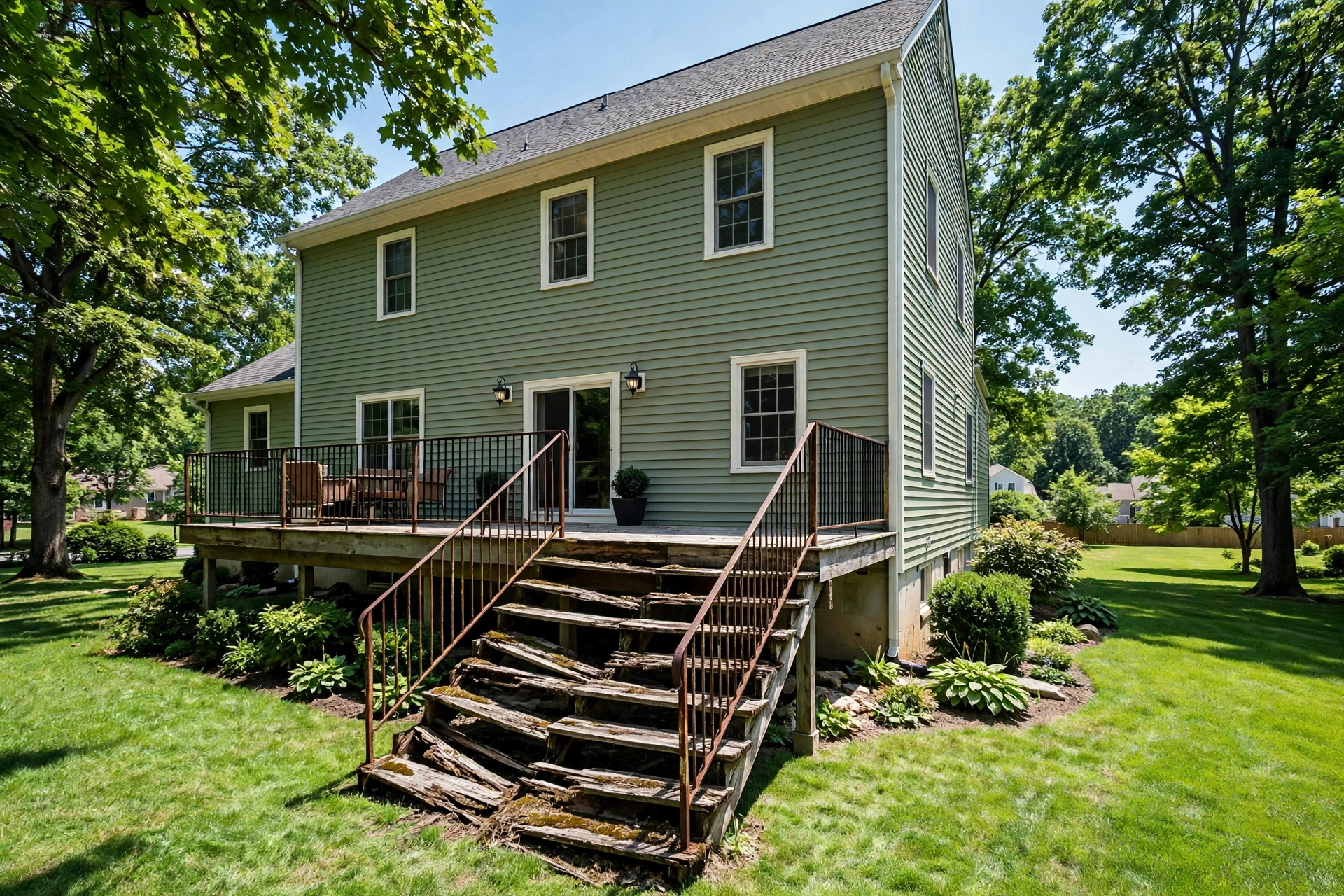
A Woodmore deck stood sound on its main surface, but the stair flight had a rotted bottom stringer, two uneven risers, and a railing that moved under hand pressure. We rebuilt the flight on a concrete pad at grade with consistent risers, replaced both stringers, and fitted a new composite railing with posts anchored into the framing. The main deck boards were kept, since inspection found them in good shape.
Measure the flight first, then the railing run. Those lengths set the base of the published ranges for this service, $2,900 to $6,700, with railing material moving the figure next, wood below composite and aluminum systems. For scale, the published guides price decks, and no Bowie company publishes a price list, so plan from published figures, labeled as such: pressure treated wood decks at $35 to $55 per square foot installed, composite decks at $55 to $90 per square foot, and typical deck projects at $15,000 to $25,000 in published figures. The site visit, tape in hand, confirms it.
Begin with the quote form at the bottom of this page, and tell us whether the work is stairs, railings, or both. At the visit we walk the flight slowly, probe the stringer bottoms, measure every riser, and push hard on the railing. Then the scope is set member by member: what is replaced, what is kept, and whether a pad at grade is needed.
Published ranges for this service in our scope run $2,900 to $6,700. Flight height and length, landing needs, and railing material and run length set your place in the range. Published guides put full wood decks at $35 to $55 per square foot installed for scale.
The bottom of a flight sits nearest damp soil, collects leaf litter, and in Bowie usually sits in shade that rarely dries. That combination rots stringer ends years before the upper flight shows wear. Rebuilt flights rest on a concrete pad or pavers.
Stated as code facts: risers and treads must be consistent through a flight, handrails must be graspable and continuous, guards are required above a set deck height, and baluster gaps are limited so small children cannot pass through.
Yes, when the main frame and surface are sound. Stairs tie into the deck edge as a semi independent structure, so a failed flight can be cut away and rebuilt on its own.
Powder coated aluminum and composite systems need the least, usually washing rather than sanding and staining. Wood railings need regular sealing and can splinter where hands run.
It can, depending on scope, since deck work in Maryland is MHIC governed home improvement and permits run through Prince George's County DPIE.
Tell us about the deck you want. We read every request that comes in and respond with the published range for that kind of work and the next step, starting with a visit to measure the yard and talk through design and materials.
Prefer to talk it through first? Send the form and we will call you back at the number you give us.